


BrainDefender 2026 Overview: MaxBrain Brainergy Defender Ingredients, Pricing, 60-Day Return Window, and Consumer Verification Checklist for Cognitive Support Supplement Shoppers
Tallmadge, OH, April 16, 2026 (GLOBE NEWSWIRE) — This article contains affiliate links. If a purchase is made through these links, a commission may be earned at no additional cost to the buyer. This article is an informational overview and does not constitute medical, health, or dietary advice. All product details described below are stated as presented by the company and should be verified directly on the official website before any purchasing decision.
BrainDefender is featured in this informational overview, which outlines how its MaxBrain Brainergy Defender formula is presented by the company, including ingredient selection, formulation approach, and general considerations for consumers researching cognitive support supplements.
It comes at a time when searches around memory, mental clarity, and age-related cognitive support continue to climb heading into 2026 — particularly among adults over 40 who are noticing the kind of mental slowdown that tends to show up gradually, in the background of otherwise busy lives. BrainDefender, a dietary supplement built around botanical and nootropic-adjacent compounds, has become one of the products frequently encountered in online searches related to cognitive support supplements.
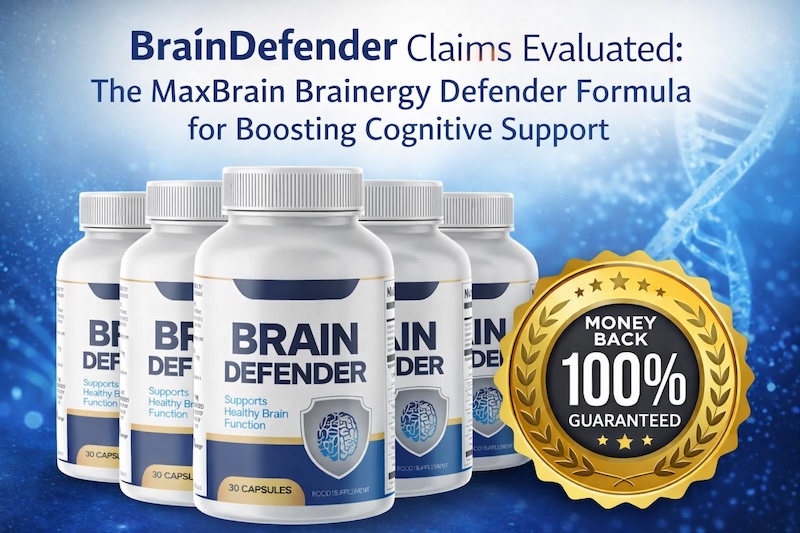
For clarity, “claims evaluated” in this context refers exclusively to how BrainDefender presents product information within its own official materials and ingredient references. It does not represent independent testing, third-party analysis, or clinical evaluation of the finished formula. This overview is published to help consumers interpret what the company states about its ingredients, what ingredient-level research has examined under controlled conditions, and what considerations remain worth discussing with a qualified healthcare provider before any purchasing decision.
Readers looking for current product details, package options, and guarantee terms can View the current BrainDefender offer (official BrainDefender page) for the latest information.
Individual results vary. Dietary supplements are not substitutes for balanced nutrition, regular physical activity, quality sleep, or professional medical guidance. Consumers should consult a qualified healthcare provider before starting any new supplement, especially when taking medications, managing a diagnosed condition, or navigating cognitive concerns that have not yet been medically evaluated.
What This Overview Covers
This overview is prepared to clarify how BrainDefender presents its formulation and ingredient references within its own official materials. It covers how the product is described, which compounds appear in the formula, how those compounds have been studied individually in published research, and what consumers may want to factor into their own decision-making.
The content is intended for general informational purposes and reflects company-provided descriptions, with references to publicly available ingredient-level research where applicable. Readers are encouraged to verify all details directly on the official BrainDefender website and to discuss any supplement consideration with their own physician or pharmacist.
Product Overview: What BrainDefender Is
BrainDefender is a dietary supplement that the company positions as a cognitive support formula focused on memory, mental clarity, and focus. The company describes the product as a daily capsule intended for adults who are noticing what its marketing refers to as mental fatigue, recall lapses, or age-related cognitive drift. It is distributed by BrainDefender out of Tallmadge, Ohio, with payments processed through ClickBank as the authorized retailer.
BrainDefender describes the product as manufactured in the United States. It is sold exclusively online through the official website rather than through traditional retail or pharmacy channels. The label, as presented by the company, lists a proprietary blend of botanicals and cognitive-support compounds that BrainDefender describes as targeting multiple pathways connected to cognitive performance — memory retrieval, attention, processing speed, and mental stamina.
The company positions BrainDefender as a non-prescription option for adults who want to be proactive about cognitive health but aren’t seeking — and don’t require — pharmaceutical intervention. It isn’t a medication, and per the company’s own product disclaimer, it isn’t intended to diagnose, treat, cure, or prevent any disease, including dementia, Alzheimer’s disease, or mild cognitive impairment.
The MaxBrain Brainergy Defender Formula: How the Company Frames It
BrainDefender’s marketing materials describe the formulation as the “MaxBrain Brainergy Defender Formula” — a multi-ingredient stack positioned by the company as supporting cognitive function in the context of age-related changes, stress, and oxidative load. The sales page cites a list of peer-reviewed studies covering ingredients such as Ginkgo Biloba, Phosphatidylserine, N-Acetyl-L-Carnitine, Bacopa Monnieri, Alpha-GPC, and Huperzine-A.
Those citations reference real, published research. Ginkgo Biloba, Bacopa Monnieri, Phosphatidylserine, and Huperzine-A each have a documented history in published cognitive research, including randomized controlled trials and meta-analyses examining attention, memory, and age-related cognitive decline. That body of ingredient-level literature is substantial and well-documented.
One important distinction the company’s own materials highlight is the difference between ingredient-level research and product-level proof. Published studies on these compounds typically test a single ingredient, at a disclosed dosage, under controlled conditions, in a specific population. Ingredient references cited relate to individual compounds and do not constitute clinical evaluation of the finished BrainDefender formula.
Consumers researching terms such as BrainDefender review, does BrainDefender work, BrainDefender legit, or MaxBrain Brainergy Defender effectiveness should keep one thing in mind: marketing claims referencing published research describe findings at the individual ingredient level — not product-level clinical outcomes measured on the finished formulation as a whole.
This overview does not assess whether the formula works for any specific reader. It clarifies how the cognitive performance language across BrainDefender’s official materials should be interpreted when consumers are doing their own due diligence.
Understanding Cognitive Support Trends: What’s Driving Consumer Interest in 2026
Consumer interest in cognitive support supplements has climbed steadily, and the reasons aren’t hard to understand. Adults in their 40s, 50s, and 60s are increasingly proactive about brain health in ways previous generations weren’t. The conversation has shifted from “wait until something’s wrong” to “support it early, support it consistently.” This mirrors a broader 2025 industry trend toward transparent, non-stimulant cognitive support and ingredient-based wellness formulations, where consumers increasingly research ingredient panels and formulation intent before committing to a daily supplement routine.
Some of the underlying concepts in this space are grounded in published medical research. Age-related cognitive change is a well-studied area of neuroscience. Processing speed, working memory, and attention shift measurably across the adult lifespan, and published research has examined lifestyle, dietary, and supplementation strategies that may support cognitive performance as people age.
Terms like “brain fog,” however, are not formal medical diagnoses. They are consumer descriptors for a cluster of experiences — slower recall, difficulty concentrating, a sense of mental haziness — that can arise from many underlying causes, including sleep deprivation, stress, hormonal shifts, medication side effects, nutrient deficiencies, or undiagnosed medical conditions. Persistent or progressive cognitive symptoms warrant evaluation by a qualified clinician rather than self-diagnosis and self-treatment through supplementation alone.
The practical takeaway is that age-related cognitive change is real and researched. Whether a specific supplement meaningfully influences that trajectory for any individual is a separate question, and one that deserves honest context rather than hype.
BrainDefender Ingredient Profile: What the Formula References
The BrainDefender formula, as described by the company includes a blend of botanicals and cognitive-support compounds with individual research histories. Consumers evaluating this category often consider factors such as ingredient transparency, dosage alignment with published studies, and medical guidance — and the ingredient section below is organized with that kind of evaluation in mind.
Ginkgo Biloba. This botanical has been studied in published research exploring working memory, attention, and blood flow-related cognitive outcomes in older adults, as referenced in the ingredient-level literature cited by the company. Research doses commonly used in clinical studies range from 120 mg to 240 mg of standardized extract daily.
Phosphatidylserine. A phospholipid that has been studied in published research examining memory and cognitive performance in aging adults, typically at doses ranging from 100 mg to 300 mg daily over 8 to 12 weeks of consistent use.
N-Acetyl-L-Carnitine. Also known as ALCAR, this amino acid derivative has been studied in published research for its role in mitochondrial function and cognitive support. Ingredient-level research on mild cognitive impairment has often used 1,500 mg to 2,000 mg daily in divided doses.
Bacopa Monnieri. This Ayurvedic herb has been studied in published research exploring memory and learning outcomes under controlled conditions, typically at standardized extract doses of 300 mg daily, with most studies observing outcomes over 8 to 12 weeks of consistent use.
Alpha-GPC. Short for Alpha Glycerophosphorylcholine, this choline-containing compound has been studied in published research examining acetylcholine-related cognitive pathways. Research doses often fall in the 300 mg to 1,200 mg range, depending on the specific study design.
Huperzine-A. An alkaloid derived from Chinese club moss, Huperzine-A has been studied in published research as an acetylcholinesterase inhibitor at microgram-level doses, typically between 50 mcg and 200 mcg in clinical investigations.
L-Glutamine and St. John’s Wort. L-Glutamine has been studied in published research in broader neurotransmitter and metabolic contexts. St. John’s Wort has a substantial research history and is better known for published research in mood-related contexts than for cognitive enhancement. It is also notable for a long list of well-documented interactions with prescription medications — particularly antidepressants, hormonal contraceptives, blood thinners, and certain cardiac medications. Consumers taking prescription medications are encouraged to discuss any St. John’s Wort-containing supplement with a physician or pharmacist before use.
One consideration worth understanding for any multi-ingredient cognitive supplement — not specific to BrainDefender — is how proprietary blends interact with published research. Studies on individual compounds typically test a single ingredient at a specific, disclosed dose. When multiple ingredients appear in a shared blend, consumers and healthcare providers may lose the ability to compare individual dosages directly against the amounts used in clinical research. This is common across the cognitive supplement category and is worth factoring into any research-to-product comparison. These references relate to individual compounds studied under controlled conditions and do not reflect outcomes from testing the finished BrainDefender formulation.
Product Positioning: Who BrainDefender May Align With
Rather than leaning on testimonials — which carry well-documented self-selection bias across the supplement industry — the more useful question is whether the product’s positioning lines up with a specific reader’s situation and expectations.
BrainDefender may align well with adults who:
Prefer plant-based and nootropic-adjacent formulas over stimulant-heavy options. The ingredient profile the company describes leans on botanicals and cognitive-support compounds rather than high-dose caffeine or pharmaceutical alternatives.
Are exploring cognitive support as part of a broader lifestyle approach. Readers who are already addressing sleep, nutrition, exercise, and stress, and who view supplementation as one additional lever rather than a standalone fix.
Value a longer return window. The company describes the product as including a 60-day return window, subject to the conditions outlined on the official website.
Are comfortable purchasing online through ClickBank’s payment system. The product is sold direct-to-consumer through the official website and is not available through retail stores or pharmacies.
Other options may be preferable for adults who:
Require full disclosure of individual ingredient dosages. Consumers who want to compare specific milligram amounts directly against published research may prefer a supplement with a fully-disclosed label.
Are taking prescription medications with known botanical interactions. Ingredients such as St. John’s Wort, Ginkgo Biloba, and Huperzine-A have documented interactions with common medications including antidepressants, anticoagulants, and hormonal contraceptives. A physician or pharmacist review before starting is essential.
Are experiencing meaningful cognitive symptoms that have not been medically evaluated. Persistent or progressive memory or cognitive issues should be assessed by a qualified clinician before any supplement is considered.
Expect rapid or dramatic changes. Ingredient-level research on compounds like Bacopa Monnieri and Phosphatidylserine suggests that any measurable effects typically require weeks to months of consistent use, not days.
Questions worth considering before ordering:
- Have the non-supplement basics — sleep, exercise, stress management, nutrition, and medical causes of cognitive changes — been addressed?
- Are there prescription medications in play that could interact with botanicals like St. John’s Wort, Ginkgo Biloba, or Huperzine-A?
- Has a healthcare provider been consulted about any cognitive concerns?
- Is there clarity on the difference between ingredient-level research and finished-product clinical proof?
- Is there willingness to evaluate the product over a multi-week window rather than expecting immediate results?
Honest answers to these questions help determine whether BrainDefender — or any cognitive supplement — fits a specific reader’s situation.
Pricing and Guarantee: What the Company Publishes
According to information published on the official BrainDefender website, the product is sold in multi-bottle packages with tiered per-bottle pricing that favors larger orders. Pricing, bonus inclusions, and shipping terms vary by package and are subject to change without notice. Purchases are described as one-time payments rather than subscriptions, with no automatic rebilling disclosed on the sales page.
The company describes the product as including a 60-day return window, subject to the conditions outlined on the official website. The published policy describes returning all bottles — full, empty, or partially used, including any bonus bottles — to the company’s Tallmadge, Ohio return address, along with a written note including order ID, name, delivery address, email, and phone number. The published terms indicate that the buyer is responsible for return shipping costs, and that refunds are processed once the return is received and inspected. Refund timelines depend on the buyer’s payment method and financial institution.
Because pricing, package options, and guarantee terms can shift, readers are encouraged to View the current BrainDefender offer (official BrainDefender page) for the latest published details before ordering. Refund requests can also be initiated through ClickBank’s self-service billing portal as the authorized payment processor.
Consumer Considerations: What to Confirm Before Ordering
A balanced evaluation of any cognitive supplement comes down to a few consistent checks, regardless of which product is being considered.
Separate ingredient research from product research. The citations on BrainDefender’s official materials reference published studies on individual compounds. Ingredient references cited relate to individual compounds and do not constitute clinical evaluation of the finished product. Knowing the difference helps set realistic expectations.
Check for drug interactions. When a formula contains St. John’s Wort, Ginkgo Biloba, or Huperzine-A, and a consumer is taking any prescription medications, a pharmacist or physician should screen for interactions before use. This is particularly important for adults on antidepressants, anticoagulants, cardiac medications, or hormonal contraceptives.
Review the full refund policy. The 60-day return window has specific conditions — return shipping responsibility, the requirement to send all bottles back, and the written return note. The full refund policy is published on the official website and should be reviewed in full before ordering.
Rule out medical causes first. Memory lapses, mental fog, and attention changes can arise from treatable medical conditions, including thyroid dysfunction, sleep disorders, vitamin deficiencies, and medication side effects. A physical exam and a basic lab panel from a primary care physician is a reasonable first step before reaching for any cognitive supplementation.
Discuss any cognitive supplement with a healthcare provider. This is especially important for adults over 50, anyone on prescription medications, anyone managing chronic conditions, and anyone with a family history of cognitive conditions. Professional medical guidance should come before any cognitive supplement purchase.
Contact Information
Company: BrainDefender
Return and Mailing Address: 285 Northeast Ave, Tallmadge, OH 44278
Email: [email protected]
Order Status Phone: (855) 473-4405
Payment Processor: ClickBank (Click Sales Inc., 1444 S. Entertainment Ave., Suite 410, Boise, ID 83709)
Self-Service Billing Support: Available through the ClickBank customer portal
Current product details, pricing, and published terms can be reviewed by readers who wish to View the current BrainDefender offer (official BrainDefender page).
Consumer Questions About BrainDefender
Is BrainDefender FDA approved?
BrainDefender is a dietary supplement. Under current federal regulations, dietary supplements do not require FDA approval before being sold. The FDA does not evaluate dietary supplement efficacy claims. Per the company’s own product disclaimer, statements on the product have not been evaluated by the Food and Drug Administration, and the product is not intended to diagnose, treat, cure, or prevent any disease — including dementia, Alzheimer’s, or mild cognitive impairment.
Does BrainDefender work for memory loss?
The company positions the product for general cognitive and memory support, but it is not represented as a treatment for diagnosed memory loss, dementia, or any neurological condition. Persistent or progressive memory problems should be evaluated by a qualified clinician. Individual responses to botanical supplements vary considerably, and ingredient-level research does not translate automatically to product-level effectiveness.
How long does BrainDefender take to show results?
Ingredient-level research on compounds like Bacopa Monnieri and Phosphatidylserine generally examines outcomes over 8 to 12 weeks of consistent use. The company’s promotional materials suggest consistent daily use over several weeks when evaluating the product. Individual timelines depend on baseline cognitive status, lifestyle factors, medication regimens, and consistency of use.
Does BrainDefender contain caffeine or stimulants?
Based on the ingredient list the company publishes, BrainDefender is not positioned as a stimulant-based formula. It relies on botanicals and cognitive-support compounds rather than caffeine-type stimulants. Consumers should review the full label for any caffeine-containing botanicals before use if caffeine sensitivity is a concern.
Can BrainDefender interact with medications?
Several ingredients commonly found in cognitive support supplements — including St. John’s Wort, Ginkgo Biloba, and Huperzine-A — have documented interactions with prescription medications such as antidepressants, anticoagulants, hormonal contraceptives, and certain cardiac medications. Consumers on any prescription medication are encouraged to have a pharmacist or physician review the full ingredient list before starting.
Is BrainDefender sold on Amazon or in retail stores?
The company states that BrainDefender is available exclusively through the official website, with ClickBank serving as the authorized payment processor. Third-party marketplace listings may not be authorized sellers, and refund eligibility and product authenticity may not be guaranteed through unauthorized channels.
What is the BrainDefender refund process?
The company describes the product as including a 60-day return window, subject to the conditions outlined on the official website. Buyers return all bottles to the company’s Tallmadge, Ohio address with a written note including order ID, name, email, phone, and delivery address. Return shipping costs are the buyer’s responsibility. Refunds are processed after the return is received and inspected.
Is BrainDefender legit?
This is a common search term for virtually every direct-to-consumer supplement. BrainDefender is sold through a legitimate payment processor (ClickBank), provides a published refund policy, lists a verifiable U.S. return address, and discloses its ingredient categories in published product information. Whether any given supplement is the right purchasing decision for a specific individual comes down to the consumer’s own evaluation of the evidence, their health situation, and the product’s published terms. Readers are encouraged to do their own research, review refund terms carefully, and consult a healthcare provider before ordering.
Who manufactures BrainDefender?
The product is distributed by BrainDefender out of Tallmadge, Ohio, with ClickBank serving as the authorized retailer. Published product information lists the supplement as manufactured in the United States. Specific manufacturing facility details can be confirmed directly with the company.
Summary
BrainDefender is a dietary supplement the company markets as the “MaxBrain Brainergy Defender Formula,” positioned in the cognitive support category for adults interested in memory, focus, and age-related cognitive considerations. The formula includes ingredients with individual published research histories — notably Ginkgo Biloba, Bacopa Monnieri, Phosphatidylserine, Alpha-GPC, and Huperzine-A. Ingredient references cited in the company’s materials relate to individual compounds and do not constitute clinical evaluation of the finished product.
The company provides a 60-day return window with specific conditions, a one-time purchase pricing structure, and a published return address and customer service contact. Age-related cognitive changes are a legitimate area of consumer interest, and persistent or progressive cognitive symptoms warrant medical evaluation before any supplementation is considered.
The cognitive supplement category has drawn ongoing regulatory attention — including from the FDA and FTC — regarding memory and brain-health marketing claims across the industry. Consumers evaluating any product in this space benefit from approaching marketing materials critically, verifying refund and return terms independently, confirming medication compatibility with a qualified healthcare provider, and understanding that ingredient-level research does not equal product-level clinical proof.
Readers who have completed their own research and want to review the full product details can View the current BrainDefender offer (official BrainDefender page).
Disclaimers
Content and Consumer Information Disclaimer: This article is an informational overview and does not constitute medical, health, dietary, financial, or legal advice. All product details, ingredient information, pricing, and policy terms described in this article are stated as presented by the company on its publicly available website and product labeling. Readers are encouraged to verify all claims directly with the manufacturer and to consult a qualified healthcare professional before beginning any dietary supplement.
FDA Health Disclaimer: These statements have not been evaluated by the Food and Drug Administration. This product is not intended to diagnose, treat, cure, or prevent any disease, including but not limited to dementia, Alzheimer’s disease, mild cognitive impairment, or any other cognitive or neurological condition. Consumers should consult a physician before starting any new supplement, especially when existing health conditions are present, medications are being taken, or during pregnancy or nursing.
Professional Medical Disclaimer: This overview is educational and does not constitute medical advice. BrainDefender is a dietary supplement, not a medication, and is not a substitute for prescribed medical treatment. Consumers currently taking medications, managing existing health conditions, pregnant or nursing, or considering major changes to a health regimen should consult a physician before starting BrainDefender or any new supplement. No medications or prescribed treatments should be changed, adjusted, or discontinued without physician guidance.
Ingredient Interaction Warning: Some ingredients commonly found in cognitive support supplements — including St. John’s Wort, Ginkgo Biloba, and Huperzine-A — have documented interactions with prescription medications such as antidepressants, anticoagulants (blood thinners), hormonal contraceptives, and certain cardiovascular medications. Consumers on any prescription medication should consult a physician or pharmacist before using any cognitive supplement.
Results May Vary: Individual results vary based on factors including age, baseline cognitive health, sleep, stress levels, lifestyle habits, consistency of use, genetic factors, current medications, and other individual variables. No outcome from the use of this product is promised or implied.
Pricing and Product Variability: All pricing, bonus offers, shipping terms, and refund policies referenced in this overview are based on information published on the official product website at the time of writing and are subject to change without notice. Consumers should verify current terms through the official website or the authorized payment processor before completing any purchase.
FTC Affiliate Disclosure: This article contains affiliate links. If a product is purchased through these links, a commission may be earned at no additional cost to the buyer. This compensation does not influence the accuracy, neutrality, or integrity of the information presented. All descriptions are based on published information from the official BrainDefender website and publicly available research on individual ingredients.
Payment Processor and Publisher Responsibility: Click Sales Inc. (ClickBank) serves as the authorized payment processor for this product. ClickBank’s role as retailer does not constitute an endorsement, approval, or review of this product or any claim, statement, or opinion used in its promotion. The publisher of this article is not responsible for typographical errors, manufacturer changes to the product after publication, or individual consumer outcomes. Readers are encouraged to verify all details directly with BrainDefender and their healthcare provider before making decisions.
CONTACT: Email: [email protected]
Order Status Phone: (855) 473-4405
 Disclaimer: The above press release comes to you under an arrangement with GlobeNewswire. Mango Bunch takes no editorial responsibility for the same.