


A 2026 informational report on Quietum Plus ear ringing relief positioning, auditory nerve support ingredients, proprietary blend considerations, tinnitus supplement pricing, and what to verify before purchasing
Aurora, CO, April 18, 2026 (GLOBE NEWSWIRE) — This report provides an informational overview of Quietum Plus, a dietary supplement positioned within the hearing support category. It presents how the product is described by the company, alongside broader discussions related to auditory health and ingredient research.
This informational report is based on publicly available product materials and general ingredient research discussions within the auditory wellness category. The phrase “claims evaluated” reflects growing consumer interest in understanding how ear ringing relief products are described.
This article contains affiliate links. If a purchase is made through these links, a commission may be earned at no additional cost to the buyer. This is an informational overview and does not constitute medical, health, or dietary advice. Dietary supplements are not intended to diagnose, treat, cure, or prevent any disease. Consult a qualified healthcare professional before starting any new supplement, especially if persistent tinnitus or hearing changes are present. All product details described below reflect publicly available information and should be verified directly on the official website before any purchasing decision.
Individual results vary. Dietary supplements are not substitutes for professional medical evaluation, diagnosis, or treatment.
This report does not represent a clinical evaluation of Quietum Plus as a finished product and does not conclude effectiveness. It reflects how the product is positioned alongside broader ingredient and research discussions.
Tinnitus and the Growing Interest in Auditory Wellness
Tinnitus is commonly described as a persistent ringing, buzzing, or hissing sound, and experiences can vary widely between individuals. For some, it is a mild background presence. For others, it can affect sleep quality, concentration, and daily comfort. The range of experiences is one reason the tinnitus support category continues to draw consumer attention.
Modern life places distinct demands on the auditory system. Prolonged noise exposure, chronic stress, disrupted sleep patterns, and cumulative environmental factors have all been discussed in published research as contributors to auditory nerve stress and tinnitus symptoms. Published research in journals including Hearing Research and The Lancet Neurology has established that tinnitus involves both peripheral auditory damage and central nervous system changes, including altered neural activity in the auditory cortex.
The concept that tinnitus is not purely an ear problem but involves brain-level processing and neural pathway disruption is well-supported in the scientific literature — and this concept is part of broader tinnitus research discussions. Quietum Plus references similar ideas in how it is positioned within the hearing support category.
That broader understanding has fueled interest in natural tinnitus support supplements — products positioned around botanical ingredients traditionally associated with nerve health, cognitive function, and antioxidant support. Quietum Plus is one of the products positioned within this conversation.
How Quietum Plus Is Positioned in the Hearing Support Category
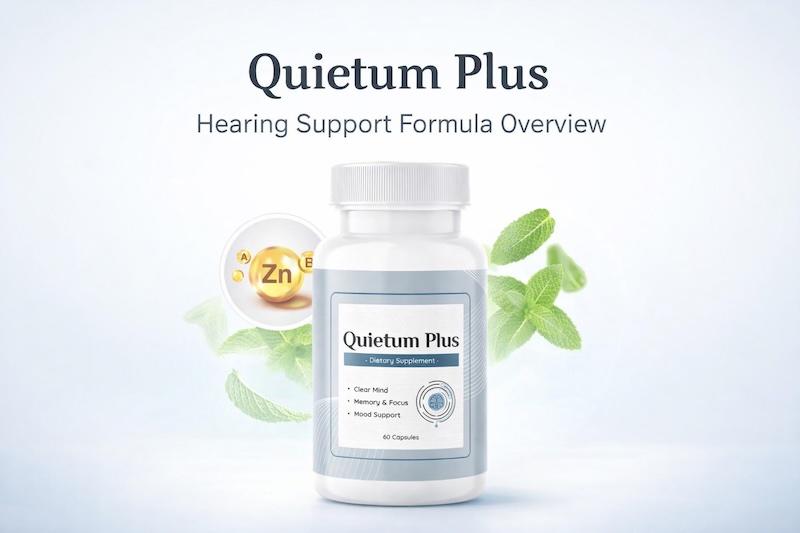
Quietum Plus is positioned as a multi-ingredient hearing support supplement built around the idea that auditory wellness involves more than just the ear — it involves the neural connection between the ear and the brain. The product is presented as a twice-daily capsule combining traditional plant extracts with vitamins, minerals, and amino acids.
The product is distributed out of Aurora, Colorado, with payments processed through ClickBank as the authorized retailer. The return address is listed as 19655 E 35th Dr #100, Aurora, CO 80011, USA.
Quietum Plus is described as containing natural ingredients that are non-GMO, gluten-free, stimulant-free, and non-habit-forming. The suggested use is two capsules daily with water — one before breakfast and one before an afternoon or evening meal.
The formulation includes twelve botanical ingredients within an 802 mg proprietary blend: Epimedium, Tribulus Terrestris, Catuaba Powder, Dong Quai, Damiana, Ashwagandha, Ginger, Maca Root, Muira Puama, Mucuna Pruriens extract, Asparagus extract, and Sarsaparilla Root. Individually listed nutrients include Vitamin A, B1, B3, B5, B6, B12, Zinc (26 mg), L-Arginine (100 mg), L-Tyrosine (100 mg), and BioPerine (500 mcg). The capsule shell is cellulose-based, suitable for vegetarian consumers.
Readers who want to review the product details can do so by viewing the current Quietum Plus offer (official Quietum Plus page).
The Ear-Brain Connection and Auditory Nerve Science
One of Quietum Plus’s most distinctive positioning elements is its connection to the concept of a “wire” that carries electrical signals from the ear to the brain. The product’s marketing describes hearing problems as occurring when this neural pathway becomes damaged, weakened, or inflamed — and positions the supplement’s ingredients as supporting the health of that connection.
The underlying science is worth understanding on its own terms. The auditory nerve — technically the vestibulocochlear nerve (cranial nerve VIII) — does transmit electrical signals from the inner ear’s cochlea to the brain’s auditory cortex. Damage to this pathway is a recognized contributor to hearing difficulties and tinnitus, and this is well-established in published auditory neuroscience.
The important distinction is between general research on auditory nerve function and tinnitus neuroscience and research on any specific dietary supplement as an intervention. Published research describes complex neurological processes involving synaptic function, neurotransmitter regulation, cortical reorganization, and cochlear hair cell damage. These are areas of active scientific investigation.
This concept reflects broader tinnitus research discussions and should not be interpreted as product-specific clinical validation. The “rebuilding the wire” framing represents how Quietum Plus positions itself within the auditory wellness conversation — and understanding where published neuroscience ends and product-specific positioning begins is a useful part of evaluating any product in this category.
Quietum Plus Ingredient Profile and Published Research Context
Several of the ingredients in Quietum Plus have a body of published research worth understanding. The following outlines how these ingredients are commonly discussed within published research literature. These studies examined individual compounds at known dosages under controlled conditions, which differs from a multi-ingredient supplement formula.
This reflects ingredient-level research and does not represent clinical evaluation of the finished product. No published clinical trials were identified evaluating Quietum Plus as a finished product for tinnitus or hearing-related outcomes.
Ashwagandha (Withania somnifera) — One of the most studied adaptogens in modern research. A 2019 randomized controlled trial published in Cureus reported significant reductions in stress and anxiety in healthy adults using a standardized root extract. Separate research published in the Journal of Dietary Supplements examined effects on memory and cognitive function. Research dosages typically ranged from 300 to 600 mg of standardized extract daily.
Mucuna Pruriens — This legume naturally contains L-DOPA, a precursor to the neurotransmitter dopamine. Published research in Frontiers in Aging Neuroscience examined its effects on neuroinflammation in Parkinson’s disease models. A tinnitus-relevant connection also exists: a study published in Medical Hypotheses explored dopaminergic pathways and tinnitus, discussing dopamine modulation as a potential approach to ear noise management. These are preclinical and theoretical findings — not clinical demonstrations of hearing improvement in supplement form.
Dong Quai (Angelica sinensis) — A traditional herb with published research in ethnopharmacology. A 1998 study examined the effects of Astragalus membranaceus and Angelica sinensis on cochlear stem cells in hearing-impaired rats. That study is notable for its direct connection to auditory health, though it examined a different formulation context and cannot be directly applied to human supplementation outcomes. Additional research published in the Journal of Ethnopharmacology explored neuroprotective properties through neurogenesis support.
Ginger (Zingiber officinale) — Published research supports antioxidant and anti-inflammatory properties. Studies in Evidence-Based Complementary and Alternative Medicine examined cognitive function improvements in middle-aged women, though not specifically in the context of tinnitus or hearing support.
Epimedium and Tribulus Terrestris — Both have published research examining neuroprotective and anti-inflammatory properties. Research in BioMed Research International examined icariin (from Epimedium) for synaptic and cognitive effects in Alzheimer’s disease models. Tribulus Terrestris has published research examining anti-Parkinson’s activity through modulation of neuroinflammatory markers. These are preclinical findings in animal models.
Maca Root (Lepidium meyenii) — Published research has examined cognitive preservation and mitochondrial function in middle-aged animal models. A randomized study in Pharmaceuticals evaluated safety and efficacy of maca extracts in adult human subjects.
The practical consideration here is that the formulation uses a proprietary blend totaling 802 mg across twelve ingredients. With twelve compounds sharing that total, it is mathematically unlikely that multiple ingredients reach the individual dosages used in published research simultaneously. For perspective, ashwagandha research alone typically uses 300 to 600 mg daily — and that is just one of twelve ingredients sharing the 802 mg blend.
This does not mean the product has no utility. It means that when marketing language references published studies, understanding the dosing context helps set realistic expectations. This dynamic applies broadly across the supplement industry, not uniquely to Quietum Plus.
Understanding “Nerve Repair” and Auditory Regeneration Language
Quietum Plus’s positioning includes language around “feeding, regenerating, and rebuilding” the neural pathway, restoring hearing clarity, and achieving a “quiet and peaceful” experience. The hearing support category is often associated with terms such as “ear ringing relief” and “tinnitus support,” which are commonly used in consumer discussions around auditory wellness supplements.
Neuroplasticity — the brain’s ability to reorganize neural connections — is a real biological process. Published research confirms that the auditory cortex can undergo changes in response to both damage and therapeutic interventions. Some compounds found in Quietum Plus ingredients have been studied for neuroprotective properties in preclinical models. That is legitimate, published science.
The broader language around “rebuilding” neural pathways through a dietary supplement represents how the product is positioned within the auditory wellness conversation. Auditory health involves complex processes influenced by genetics, noise exposure history, vascular health, inflammation, medications, and aging. A conversation with a healthcare provider alongside independent research provides the most complete picture of available tinnitus management options.
Readers who want to review the full product positioning can do so by viewing the current Quietum Plus offer (official Quietum Plus page).
What Consumers in This Category Typically Evaluate
Consumers evaluating supplements in the hearing support category often compare factors such as ingredient composition, delivery format, and labeling transparency. Here is how Quietum Plus’s profile aligns with those common considerations:
Plant-based ingredient profile: The formulation includes established botanical extracts, vitamins, and amino acids rather than synthetic compounds or stimulants — a characteristic many consumers in this category actively seek.
Multi-ingredient convenience: Rather than sourcing twelve separate supplements, the formula bundles commonly studied brain and nerve health botanicals into a single daily serving. For adults managing multiple supplements, this is a practical factor.
Cognitive and stress support dimensions: The inclusion of Ashwagandha, Maca Root, and Mucuna Pruriens adds adaptogenic and neuroprotective properties that complement the hearing-focused ingredients — particularly relevant for individuals whose tinnitus concerns are connected to chronic stress or cognitive fatigue.
No stimulants disclosed: The published ingredient list does not include caffeine or synthetic stimulants, which may be a relevant consideration for consumers who are sensitive to stimulants or whose tinnitus symptoms are affected by stimulant intake.
For consumers who prioritize full-disclosure labeling with individual ingredient dosages, the proprietary blend structure means those specific amounts are not publicly available for comparison against research dosages. Adults experiencing sudden hearing loss, severe tinnitus, or new auditory symptoms should consult a healthcare provider for appropriate clinical evaluation rather than relying on any dietary supplement alone.
Quietum Plus Pricing Overview
Based on publicly available information on the official website at the time of this report, Quietum Plus is offered in multi-bottle packages. The 6-bottle option is listed at a total of $294 with free shipping. The 3-bottle option is listed at $207 with free shipping. The 2-bottle option is listed at $158 plus $9.99 shipping. Each bottle contains 60 capsules, representing a 30-day supply at the recommended two-capsule daily serving.
All purchases are presented as one-time payments with no subscriptions or automatic rebilling. Multi-bottle packages include bonus digital guides presented as supplementary wellness resources. Pricing and availability can change, so verifying current terms directly is recommended. Readers who want to review pricing details can do so by viewing the current Quietum Plus offer (official Quietum Plus page).
Refund Policy and 60-Day Guarantee
Quietum Plus orders are described as being backed by a 60-day money-back guarantee. The published policy outlines that consumers who are unsatisfied within the first 60 days of receiving their order can request a full refund by emailing the support team at [email protected] with “Refund Request” in the subject line.
The return process involves sending all bottles — whether opened or unopened — along with the packing slip to the Aurora, Colorado address. Refund processing is described as taking several business days after the returned package arrives, with credit card statement timelines varying by financial institution. Return shipping costs are the customer’s responsibility.
Verifying current guarantee terms directly before ordering is recommended, as conditions and timeframes can change.
Practical Considerations
For anyone evaluating Quietum Plus or any other product in the tinnitus support category, several practical points are worth understanding:
Ingredient-level research and product-level research are different things. The ingredients in Quietum Plus have published research behind them individually. Those studies used known dosages of specific compounds under controlled conditions. Quietum Plus as a finished formula has not been the subject of published clinical trials. That distinction is common across the supplement industry but is worth understanding when setting expectations.
Dosage transparency matters. The proprietary blend totals 802 mg across twelve ingredients. Without disclosed per-ingredient milligram amounts, comparing the formula against the dosages used in published research is not possible from publicly available information. Consumers who consider this important may want to contact the manufacturer directly.
The “rebuilding the wire” concept is a positioning framework. Published research on auditory neuroscience, neuroplasticity, and neuroprotective compounds exists — but no published study has tested any dietary supplement as a specific intervention for regenerating the auditory nerve pathway.
Ingredient interactions are worth checking. Ashwagandha may interact with thyroid medications, sedatives, and immunosuppressants. Ginger has mild blood-thinning properties and may interact with anticoagulant medications. Mucuna Pruriens contains L-DOPA and should be discussed with a physician before use alongside medications for Parkinson’s disease, depression, or other neurological conditions.
A healthcare provider is the best starting point for tinnitus concerns. Tinnitus can be associated with underlying medical conditions that require clinical evaluation. Dietary supplements are not intended to replace medical evaluation or prescribed treatment. Medications should never be changed, adjusted, or discontinued without physician guidance.
Frequently Asked Questions
What is Quietum Plus?
Quietum Plus is a dietary supplement presented as a natural hearing support formula. The formulation includes twelve botanical ingredients within a proprietary blend, along with B vitamins, Zinc, amino acids, and BioPerine. The product is positioned as supporting the neural connection between the ear and brain.
Is Quietum Plus FDA approved?
Quietum Plus is a dietary supplement. Under current federal regulations, dietary supplements do not require FDA approval before being sold. The FDA does not evaluate supplement efficacy claims. The product is described as being manufactured in a facility that is FDA-registered, which relates to manufacturing standards rather than product approval.
What does “ear-brain wire” mean in Quietum Plus’s positioning?
The product’s positioning describes a “wire” connecting the ear to the brain — a simplified description of the auditory nerve (vestibulocochlear nerve). Published neuroscience confirms this pathway exists and that damage to it contributes to tinnitus. No published study has demonstrated that a dietary supplement can “rebuild” or “regenerate” this pathway. This concept reflects broader tinnitus research discussions and should not be interpreted as product-specific clinical validation.
Are the individual ingredient dosages disclosed?
The vitamins, minerals, and amino acids are listed with specific amounts. The twelve botanical ingredients are listed within a proprietary blend totaling 802 mg, without individual milligram amounts disclosed. The individual botanical dosages cannot be compared against amounts used in published research studies from publicly available information alone.
How long does Quietum Plus take to show results?
The product’s FAQ indicates that supplements generally take around 9 to 12 weeks to show results, though some people may notice changes sooner. Individual timelines depend on many factors including age, baseline health, severity of symptoms, and consistency of use. Results are not guaranteed.
Is Quietum Plus safe?
The product is described as containing natural, well-tolerated ingredients. It is presented as non-GMO, gluten-free, stimulant-free, and non-habit-forming. Several ingredients do have documented interactions with certain medications. Adults taking medications or managing health conditions should consult a healthcare provider before use.
What is the return process?
The published policy describes a 60-day money-back guarantee. The return process involves emailing [email protected] with “Refund Request” in the subject line, then shipping all bottles and the packing slip to the Aurora, Colorado address. Return shipping costs are the customer’s responsibility. Current terms should be verified directly before ordering.
Where is Quietum Plus available?
The product is presented as available exclusively through the official website and is not sold in retail stores or third-party marketplaces. Readers who want to review the product details can do so by viewing the current Quietum Plus offer (official Quietum Plus page).
Contact Information
For questions before or during the ordering process, Quietum Plus lists the following customer support channels:
Phone: 1-800-390-6035
International: +1 208-345-4245
Email: [email protected]
Order Self-Service: https://www.clkbank.com
Mailing Address: 19655 E 35th Dr #100, Aurora, CO 80011 U.S.A.
Readers who want to review the product details can do so by viewing the current Quietum Plus offer (official Quietum Plus page).
Additional Reading
Consumers researching Quietum Plus may find additional context in previously published informational coverage of this product:
Quietum Plus ingredient profile and tinnitus-supporting formulation overview
Ear ringing relief supplement category breakdown for 2026
Quietum Plus consumer discussion and product positioning overview
Evaluating multiple sources is recommended before making any purchasing decision. Readers may also wish to consult general guidance on dietary supplement labeling and auditory health resources from recognized medical organizations.
Disclaimers
FDA Health Disclaimer: These statements have not been evaluated by the Food and Drug Administration. This product is not intended to diagnose, treat, cure, or prevent any disease. Always consult a physician before starting any new supplement, especially with existing health conditions, current medications, pregnancy, or nursing.
Professional Medical Disclaimer: This article is educational and does not constitute medical advice. Quietum Plus is a dietary supplement, not a medication. Individuals currently taking medications, managing existing health conditions, pregnant or nursing, or considering major changes to a health regimen should consult a physician before starting Quietum Plus or any new supplement. Medications and prescribed treatments should not be changed, adjusted, or discontinued without physician guidance and approval. Tinnitus can be associated with underlying medical conditions that require clinical evaluation — persistent or worsening symptoms should be discussed with a qualified healthcare professional.
Results May Vary: Individual results will vary based on factors including age, baseline health condition, severity and duration of tinnitus symptoms, consistency of use, genetic factors, current medications, and other individual variables. Results are not guaranteed.
FTC Affiliate Disclosure: This article contains affiliate links. If a purchase is made through these links, a commission may be earned at no additional cost to the buyer. This compensation does not influence the accuracy, neutrality, or integrity of the information presented.
Pricing Disclaimer: All prices, discounts, and promotional offers mentioned were accurate at the time of publication (April 2026) but are subject to change without notice. Always verify current pricing and terms on the official Quietum Plus website before making a purchase.
Publisher Responsibility Disclaimer: The publisher of this article has made every effort to ensure accuracy at the time of publication. Readers are encouraged to verify all details directly with Quietum Plus and a healthcare provider before making decisions.
Ingredient Interaction Warning: Some ingredients in Quietum Plus may interact with certain medications or health conditions. Ashwagandha may interact with thyroid medications, sedatives, and immunosuppressants. Ginger has mild blood-thinning properties and may interact with anticoagulant medications. Mucuna Pruriens contains L-DOPA and should be discussed with a physician before use alongside medications for Parkinson’s disease, depression, or other neurological conditions. A healthcare provider should always be consulted before starting any supplement, especially when taking blood thinners, blood pressure medications, thyroid medications, or managing chronic health conditions.
CONTACT: Phone: 1-800-390-6035
International: +1 208-345-4245
Email: [email protected]
Order Self-Service: https://www.clkbank.com
 Disclaimer: The above press release comes to you under an arrangement with GlobeNewswire. Mango Bunch takes no editorial responsibility for the same.